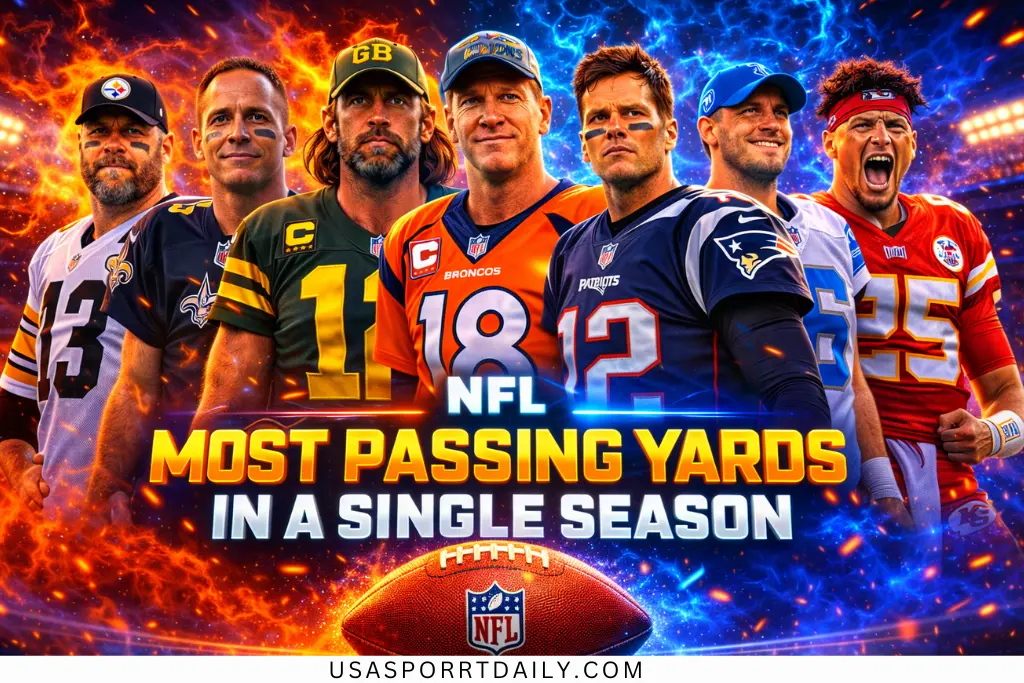
In the modern NFL, passing yards are a critical measure of quarterback performance and offensive success.
Tracking NFL single season passing yards record helps fans and analysts understand which quarterbacks dominate through the air and set benchmarks for excellence.
Quarterbacks with high passing yard totals can sustain drives, convert crucial third downs, and consistently put points on the board. In today’s pass-heavy NFL, achieving a high number of passing yards often defines the most successful seasons in league history.
How Passing Yards Reflect Quarterback Performance
Passing yards are more than just numbers—they reflect a quarterback’s skill, accuracy, and ability to read defenses under pressure.
Elite signal-callers who achieve the most passing yards in NFL history demonstrate not only arm talent but also timing with receivers, decision-making, and leadership.
For example, quarterbacks who appear among NFL passing yards leaders consistently impact game outcomes and are often featured in discussions of the highest passing yard season in NFL history.
These yardage milestones also provide context for evaluating single-season dominance and overall career impact.
Evolution of the NFL into a Pass-Heavy League
Over the past few decades, the NFL has transformed from a run-first league into a pass-dominant league. Rule changes protecting quarterbacks and receivers, combined with innovative offensive schemes, have enabled more prolific passing seasons.
Today, quarterbacks like Patrick Mahomes and Justin Herbert regularly challenge the record for most passing yards in an NFL season, surpassing historical benchmarks.
As a result, the single season passing yards NFL records have increased steadily, and analyzing NFL passing leaders by year highlights the league’s ongoing trend toward aerial attacks.
Brief Notes on Each Season’s Context
Each season presents unique factors that influence passing yard totals, from coaching strategies to offensive line strength and receiver talent.
Some seasons see quarterbacks posting record-breaking yardage thanks to top NFL single season passing performances, while other seasons reflect lower totals due to injuries or slower-paced offenses.
Context is essential when reviewing quarterbacks with highest passing yards in NFL history, as individual achievement is intertwined with team dynamics and league-wide trends.
Understanding these factors allows fans to appreciate not only the best passing seasons in NFL history but also the evolution of NFL offensive stats single season over time.
Also read Top 10 NFL QBs With Most Thrown Pick-6s
Historical Milestones: Record-Breaking Seasons Through the Decades
Early NFL Passing Legends and Pioneers
The NFL’s passing game didn’t always dominate headlines. In the early days, the league was built on ground-and-pound football, but visionaries like Johnny Unitas and Dan Marino changed that.
These quarterbacks weren’t just skilled throwers—they were pioneers who showed that a team could win through the air.
Their performances set early benchmarks for what would eventually become single season passing yards NFL records and laid the groundwork for future stars chasing NFL passing yardage milestones. Watching their games today, you can see the roots of the high-flying offenses that define modern football.
The Shift from Run-First to Pass-First Offenses
For decades, running the football was king, and quarterbacks often had limited opportunities to pad their stats.
But by the late 1970s and into the 1980s, offensive philosophies started to shift. Coaches began designing schemes that favored quick reads, shotgun formations, and creative passing plays. Suddenly, quarterbacks could rack up yards like never before.
This transformation is why today’s NFL passing yards leaders consistently post numbers that would have seemed impossible in earlier eras. The game had truly entered a pass-first era, and fans were along for the thrilling ride.
Key Records Set in the 1980s, 1990s, and 2000s
The 1980s were a turning point. In 1984, Dan Marino threw for a staggering 5,084 yards, setting a single-season benchmark that stunned the football world and stood unbroken for years.
The 1990s brought quarterbacks like Brett Favre and Steve Young, who combined precision with toughness to push the limits of passing production.
By the 2000s, Peyton Manning and his peers were redefining what it meant to have one of the top NFL single season passing performances, using fast-paced, high-volume passing attacks to challenge the records of the past.
Each decade tells a story of evolution: from the pioneers to today’s record-breakers, it’s clear how the NFL’s passing game has grown into the spectacle fans love.
Top Single-Season Passing Yard Leaders in NFL History

When it comes to NFL single season passing yards record, a few quarterbacks truly stand out. Over the decades, these signal-callers have redefined what it means to dominate through the air.
Here’s a look at the top single-season passing yard leaders in NFL history, highlighting the quarterbacks, their teams, and the years they made football history.
Top Passing Yard Seasons
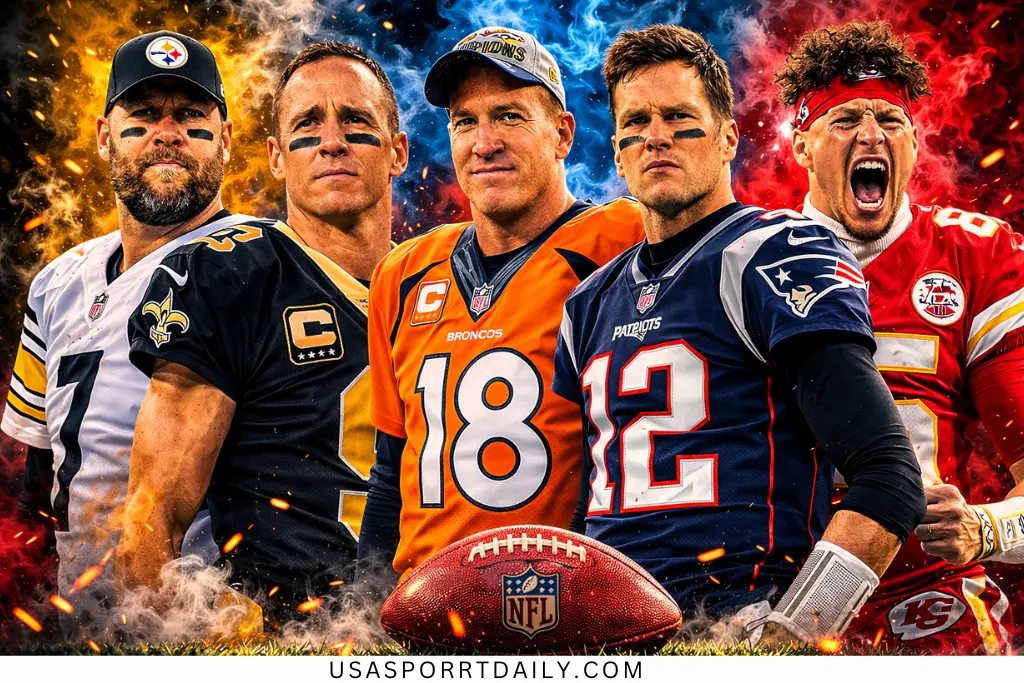
- Patrick Mahomes – Kansas City Chiefs (2022) – 5,250 yards
Mahomes shattered previous records with his combination of arm strength, mobility, and offensive creativity, setting a new benchmark for the highest passing yard season in NFL history. - Tom Brady – Tampa Bay Buccaneers (2021) – 5,316 yards
Brady, even late in his career, proved why he remains one of the all-time quarterbacks with highest passing yards in NFL history, guiding the Bucs through a high-octane passing attack. - Peyton Manning – Denver Broncos (2013) – 5,477 yards
Manning’s record-breaking season combined precision and pace, exemplifying one of the top NFL single season passing performances ever. - Drew Brees – New Orleans Saints (2011) – 5,476 yards
Known for his accuracy and quick release, Brees set the NFL passing yard stats 2026 benchmark that defined modern quarterback play. - Ben Roethlisberger – Pittsburgh Steelers (2018) – 5,129 yards
Big Ben’s strong arm and clutch throws helped him post one of the best passing seasons in NFL history. - Dan Marino – Miami Dolphins (1984) – 5,084 yards
Marino’s legendary season stood for decades, showing the early evolution of NFL record-breaking passing seasons. - Matt Ryan – Atlanta Falcons (2016) – 5,123 yards
Ryan’s precise and efficient play helped him rank among the NFL passing yards leaders for single-season performances. - Jared Goff – Los Angeles Rams (2018) – 5,090 yards
Goff’s breakout season highlighted how modern offensive schemes allow quarterbacks to achieve NFL passing yardage milestones. - Aaron Rodgers – Green Bay Packers (2020) – 4,995 yards
Rodgers’ mix of timing and accuracy put him just shy of the 5,000-yard mark, but firmly in the top NFL single season passing performances. - Tom Brady – New England Patriots (2011) – 5,235 yards
Brady consistently redefined excellence, proving why he’s a staple in discussions of quarterbacks with highest passing yards in NFL history.
Notable Patterns in Record-Setting Seasons
Several patterns emerge when reviewing these elite passing seasons:
- Pass-heavy offensive schemes dominate the rankings. Teams increasingly rely on aerial attacks to win games.
- High-volume passing quarterbacks tend to set records when paired with elite receiving corps.
- Rule changes favoring passing—like limits on defensive contact—have contributed to modern spikes in yardage.
- Many record seasons occur in fast-paced, high-scoring offenses, showing the connection between team strategy and individual performance.
These seasons aren’t just numbers—they tell the story of how the NFL has evolved, highlighting the quarterbacks who pushed the limits of the passing game.
From Dan Marino’s pioneering 1984 season to Patrick Mahomes’ modern record-breaking year, the league’s passing milestones continue to grow, giving fans and analysts a benchmark for quarterback greatness.
Case Study: The Current Record Holder
Profile of the Record-Holding Quarterback
The current NFL single season passing yards record belongs to Patrick Mahomes of the Kansas City Chiefs (2022), who threw for an astonishing 5,250 yards.
Known for his rocket arm, creativity under pressure, and ability to extend plays, Mahomes has redefined what it means to dominate through the air.
His record-breaking season placed him at the pinnacle of quarterbacks with highest passing yards in NFL history, joining an elite list of passers like Peyton Manning, Drew Brees, and Tom Brady.
Game-by-Game Breakdown
Mahomes’ 2022 season was a masterclass in consistency and explosiveness. From early-season statement games against division rivals to high-stakes matchups in primetime, he averaged over 300 passing yards per game.
Several contests featured multiple touchdown passes and deep connections with his top receivers, reflecting both his skill and the offensive scheme designed to maximize passing opportunities.
Week-to-week, Mahomes showed resilience, adjusting to defenses while maintaining high efficiency—key traits of any top NFL single season passing performance.
Context: Offensive Scheme, Teammates, and League Trends
The Chiefs’ record-setting offense in 2022 was built on the spread and Air Raid principles, allowing Mahomes to throw from multiple formations and capitalize on mismatches.
His supporting cast, including elite wideouts and reliable tight ends, along with a strong offensive line, provided the protection and targets needed for NFL passing yardage milestones.
League trends, such as rule changes limiting defensive contact, also created a favorable environment for high-volume passing. Combined, these factors made Mahomes’ season not only a personal achievement but a reflection of the modern pass-heavy NFL.
Factors That Influence High Passing Yard Seasons
Several key elements contribute to a quarterback reaching single-season passing yards NFL records:
- Offensive Schemes
Systems like the West Coast offense, spread offense, and Air Raid prioritize passing, increase the number of attempts, and allow quarterbacks to accumulate yardage quickly. - Quarterback Skillset and Decision-Making
Elite QBs like Mahomes, Manning, and Brees combine accuracy, vision, and quick reads with the ability to improvise under pressure—critical for achieving NFL record-breaking passing seasons. - Supporting Cast
Talented receivers, tight ends, and a reliable offensive line are essential. Target depth and protection dictate how consistently a quarterback can execute. - Game Pace and Pass Attempts
High-tempo offenses lead to more plays per game, providing more opportunities for yardage. Teams that rely on the pass heavily naturally produce top NFL single season passing performances.
Understanding these factors shows why single-season passing records are not just about talent—they reflect team strategy, offensive innovation, and evolving NFL offensive stats single season trends.
Mahomes’ record, for example, is as much a product of his skill as it is of the Chiefs’ system, personnel, and the modern rules favoring passing.
The Role of Rule Changes in Boosting Passing Stats
The evolution of single season passing yards NFL records isn’t just about talented quarterbacks—it’s also a story of changing rules that have shaped the modern passing game.
Over the past few decades, the NFL has implemented several key rule changes designed to protect quarterbacks and receivers, and these adjustments have directly contributed to record-breaking passing performances.
NFL Rules Favoring the Passing Game
One of the most significant shifts has been the emphasis on protecting defenseless receivers and limiting illegal contact by defenders. These rules give quarterbacks more confidence to throw downfield, knowing their receivers are less likely to be hit immediately after catching the ball.
As a result, quarterbacks like Patrick Mahomes, Peyton Manning, and Drew Brees have been able to push the boundaries of NFL passing yardage milestones with fewer interruptions from aggressive defenses.
Other adjustments, such as stricter roughing-the-passer penalties and protections for blindside hits, have also created a safer environment for QBs to take calculated risks.
This rule-driven freedom has been a key factor in top NFL single season passing performances, enabling more explosive plays and higher yardage totals.
Impact of Season Length Changes
Another major contributor to rising passing stats is the gradual increase in NFL season length. The league moved from 14-game seasons to 16-game seasons in 1978 and recently to 17-game seasons in 2021.
Longer seasons naturally give quarterbacks more opportunities to accumulate passing yards, making it easier to challenge the record for most passing yards in an NFL season.
For instance, Dan Marino’s legendary 1984 season of 5,084 yards came in a 16-game schedule, while modern quarterbacks like Mahomes have the advantage of an extra game, helping them surpass previous single-season milestones.
When analyzing NFL passing yards leaders by year, it’s clear that season length, combined with pass-friendly rules, has contributed to the steady increase in passing yard totals over the decades.
Together, rule changes and longer seasons have created the perfect environment for quarterbacks to achieve historic NFL record-breaking passing seasons, turning high yardage into the norm rather than the exception.
Understanding these factors helps put records like Mahomes’ and Manning’s into context and highlights how the league itself has evolved to favor the aerial attack.
Comparing Eras: Modern vs. Classic Passing Seasons
When discussing NFL single season passing yards record, it’s important to consider era differences. Quarterbacks from earlier decades, like Dan Marino or Johnny Unitas, played in run-heavy offenses with stricter defensive rules and shorter seasons.
Adjusting passing yards for era—taking into account games played, pass attempts, and offensive pace—provides a fair comparison with modern stars like Patrick Mahomes or Peyton Manning.
Statistical measures such as yards per attempt, completion percentage, and overall efficiency reveal that while raw yard totals have inflated, the skill required to sustain a high passing game has remained consistent.
Era adjustments show that some classic seasons would still rank among the top NFL single season passing performances if played today, proving the talent of past quarterbacks in shaping NFL passing yardage milestones.
Notable Quarterbacks Who Came Close
Many elite quarterbacks flirted with the record for most passing yards in an NFL season but fell just short.
Aaron Rodgers, Matt Ryan, and Tom Brady have posted seasons over 5,000 yards but were often limited by factors like injuries, weather conditions, or team play-calling.
Analyzing their near-record performances highlights how every detail—supporting cast, offensive scheme, and game tempo—can make or break a top NFL single season passing performance.
These near-misses underscore the difficulty of achieving most passing yards in NFL history. Even the most talented QBs need the perfect combination of skill, opportunity, and team strategy to reach record-breaking totals.
Predicting Future Record Breakers
Looking ahead, trends in passing yards per game indicate that the NFL’s pass-heavy evolution is continuing.
Young stars such as Justin Herbert, Joe Burrow, and Trevor Lawrence are already showing the potential to challenge existing records.
Teams employing spread, Air Raid, or West Coast systems with high-tempo offenses are most likely to support future NFL passing yard leaders.
If current trends hold, single-season records could be broken more frequently, especially as rules continue to favor passing and team offenses emphasize aerial production. Fans can expect more explosive NFL record-breaking passing seasons in the coming years.
Conclusion: Legacy and Impact of Single-Season Passing Records
Record-breaking passing seasons do more than set numbers—they define legacies.
Quarterbacks who achieve single season passing yards NFL records become benchmarks for greatness, influencing Hall of Fame considerations and shaping NFL history.
Players like Peyton Manning, Drew Brees, and Patrick Mahomes are remembered not just for wins, but for how they pushed the limits of the passing game.
These milestone seasons highlight the evolution of the NFL, the impact of offensive schemes, and the interplay between talent and opportunity.
Each record tells a story of a quarterback at their peak, surrounded by teammates and systems designed to elevate their performance.
In the ever-evolving landscape of professional football, single-season passing records remain one of the most exciting measures of quarterback excellence.
FAQ: NFL Single-Season Passing Yards
Who holds the record for most passing yards in a single NFL season?
Patrick Mahomes (Kansas City Chiefs, 2022) with 5,250 yards.
How do passing records compare across eras?
Earlier quarterbacks played in run-heavy offenses with fewer games. Modern QBs benefit from longer seasons and pass-friendly rules, which boost yardage.
Which quarterbacks came close to breaking the record?
Tom Brady, Aaron Rodgers, Drew Brees, Matt Ryan—all had seasons over 5,000 yards but fell just short.
How have rule changes affected passing stats?
Rules protecting receivers and quarterbacks and penalties for defensive contact make it easier for QBs to throw for high yardage.
What offensive systems produce the most passing yards?
Spread offense, Air Raid, and West Coast offense—these systems prioritize passing and increase opportunities for big yardage seasons.
Are passing yard records important for a quarterback’s legacy?
Yes. They cement a QB’s place in history, impact Hall of Fame chances, and highlight peak performance.