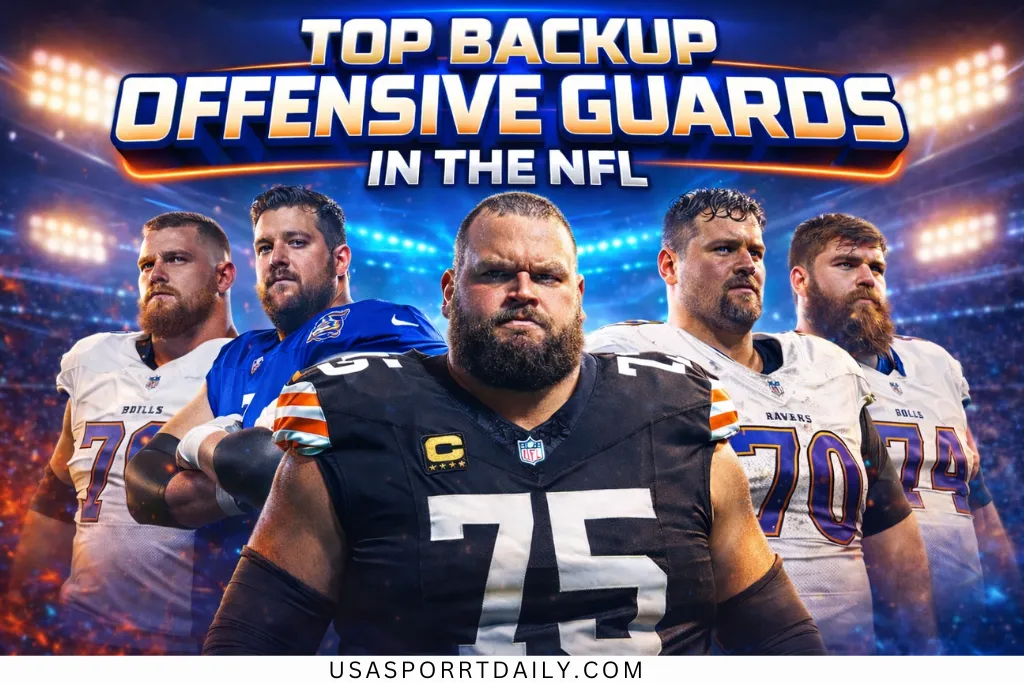
Backup offensive guards rarely get headlines. But they often decide games. In today’s NFL, interior offensive line depth is no longer optional. It is essential. Teams that ignore guard depth struggle when injuries hit or performance drops. Strong rosters are built beyond the starting five.
Why offensive guard depth is critical in modern NFL offenses
Modern NFL offenses are fast and pass-heavy. Defenses attack the interior with speed and power. Guards must anchor against bull rushes and react to stunts. One weak guard can collapse the pocket. This disrupts timing and forces mistakes. Backup guards help maintain protection schemes. They keep the offense stable. This is why offensive line depth is a key roster strategy.
Injury rates and rotational usage on interior OL
Offensive guards face constant physical stress. Every snap involves contact. Injuries to ankles, knees, and shoulders are common. Few linemen play all 17 games at full strength. Teams now rotate players more often. Backup guards see real snaps each week. They are used to manage fatigue and maintain performance. Fresh linemen help late in games. Depth ensures consistency across four quarters.
How elite teams prioritize OL depth vs star power
Top NFL teams focus on trench depth. They do not rely only on Pro Bowl guards. Instead, they build a strong second unit. This reduces performance drop-off during injuries. Teams with strong offensive line depth stay competitive all season. They adapt better. Coaches can adjust schemes with confidence. Star players matter, but depth often defines playoff success.
Evolution of the “sixth lineman” role in pass-heavy offenses
The sixth offensive lineman role has grown in importance. Many teams use backup guards in heavy formations. They line up as extra blockers in pass protection or short-yardage plays. This adds flexibility to offensive schemes. A backup guard must be versatile. He needs to understand multiple positions. In pass-heavy systems, extra protection is critical. This evolution highlights the rising value of backup offensive guards in today’s NFL.
What Defines an Elite Backup Guard in 2026?
The role of a backup guard has changed. In 2026, teams want more than just a replacement. They want reliability, flexibility, and game-ready talent. A great backup guard can step in without slowing the offense. He fits multiple schemes and handles high-pressure situations.
Versatility (Guard + Center + Tackle Flex)
Versatility is the biggest asset today. A backup guard must play multiple positions. Guard is the base. But center and tackle flexibility adds real value. This allows teams to carry fewer linemen on game day.
Most teams dress only 7 or 8 offensive linemen. That makes multi-position players critical. One injury should not break the lineup. A versatile backup can shift across the line. This keeps combinations intact. It also helps with in-game adjustments. Coaches trust players who understand different roles.
Pass Protection Reliability
Pass protection is non-negotiable. Interior pressure is more damaging than edge pressure. It collapses the pocket instantly. Quarterbacks cannot step up. Timing breaks down fast.
An elite backup guard must hold his ground. He must read blitzes and react quickly. Strong hands and balance are key. In QB-driven offenses, pocket integrity is everything. Even a few bad snaps can change a game. Reliable backups prevent that drop-off.
Run-Game Scheme Fit
Run schemes vary across teams. Some use zone blocking. Others prefer gap schemes. A top backup guard must adapt to both. He should understand angles, timing, and spacing.
Pulling ability is a major plus. Guards often lead runs on counters and power plays. Reaching the second level is just as important. Blocking linebackers in space requires agility. A well-rounded backup fits any system. This gives coordinators more freedom.
Experience vs Developmental Upside
Teams balance experience with potential. Veteran guards bring stability. They understand defensive looks. They make fewer mistakes. This is valuable in big moments.
Young players offer upside. They bring energy and athleticism. But they need reps. Practice helps, but live snaps matter more. The best backups show growth quickly. Teams prefer players who can contribute now and improve over time.
Methodology & Ranking Criteria
Ranking the top backup offensive guards in the NFL is not simple. It goes beyond basic stats. Backup linemen do not always play full games. So evaluation must balance opportunity, performance, and context. A mix of film study and analytics gives the clearest picture.
Snap Counts vs Efficiency Metrics
Snap counts matter, but they do not tell the full story. Some backups play limited snaps. Others step in for multiple games. More snaps mean more exposure. But efficiency is key.
Metrics like pressure rate allowed and run block success rate are crucial. A guard playing fewer snaps but performing cleanly can rank higher. Consistency matters more than volume. Quality over quantity defines elite backups.
Film Grading vs Analytics (PFF-Style Influence)
Film study remains essential. It shows technique, awareness, and effort. Analysts look at hand placement, footwork, and reaction to stunts. These details do not always show up in stats.
Analytics, including grading systems similar to Pro Football Focus, add another layer. They provide structured scoring across plays. While not perfect, these grades help compare players across teams. The best evaluations combine both film and data.
Injury Replacement Performance
This is one of the biggest factors. Backup guards are judged by how they perform when starters go down. Stepping in mid-game is tough. Starting multiple weeks is even harder.
Top backups maintain stability. The offense should not collapse. Pass protection stays solid. Run lanes still open. Players who perform well under pressure rank higher. This shows readiness and mental toughness.
Strength of Competition Faced
Not all snaps are equal. Facing elite defensive tackles is a different challenge. Guards who perform well against top-tier opponents stand out.
Evaluators consider matchups. Holding ground against strong interior rushers boosts a player’s value. It shows they can handle playoff-level competition. This adds weight to their ranking.
Contract Value vs Production
Value matters in roster building. Backup guards are not always highly paid. Teams look for cost-effective production.
A player on a modest contract delivering strong performance is highly valuable. It allows teams to invest elsewhere. High production at low cost is a key ranking factor. It reflects smart roster construction and long-term planning.
The Current State of NFL Interior Offensive Line Depth (2026)
The NFL is facing a clear problem in 2026. There are not enough quality interior offensive linemen. Guards and centers are harder to develop than ever. College systems do not always prepare players for pro-level blocking schemes. This creates a gap in ready-to-play talent. As a result, teams are constantly searching for reliable depth.
League-wide shortage of quality linemen
Across the league, offensive line depth is thin. Many teams struggle to find even five solid starters. Beyond that, the drop-off is steep. Backup guards are often forced into action before they are fully ready.
Defensive fronts are also getting stronger and faster. Interior defenders are more athletic now. This makes the shortage more noticeable. Teams cannot hide weak linemen anymore. Every snap is a test. This is why depth at guard has become a major concern for front offices.
Rising salaries for even average starters
The market reflects the shortage. Even average starting guards are earning higher salaries. Teams are willing to pay more for stability. A dependable interior lineman is seen as a premium asset.
This also impacts roster building. Spending big on starters leaves less room for depth. Teams must find cheaper, reliable backups. Young players on rookie deals and versatile linemen become valuable options. The financial side of the game has made depth even more strategic.
Why backup guards are more valuable than ever
Backup guards are no longer just reserves. They are essential pieces of a successful roster. Injuries are common. Rotations are frequent. A strong backup can keep the offense running without disruption.
They also provide flexibility. Coaches can adjust schemes without worrying about personnel limits. In pass-heavy offenses, protecting the quarterback is everything. One weak link inside can ruin a game plan.
In 2026, the best teams are not just strong at the top. They are deep. And that depth often starts with reliable backup guards who are ready to step in and perform at a high level.
Top 10 Backup Offensive Guards in the NFL — 2026 Edition
10. Teven Jenkins – Cleveland Browns
A powerful interior lineman with previous starting snaps under his belt, Jenkins returns on a short‑term deal and is projected to be a key rotational piece behind Cleveland’s main guards. His versatility across multiple interior spots adds valuable depth.
9. Juice Scruggs – Detroit Lions
Listed as a reserve on Detroit’s guard depth chart, Scruggs brings stout run‑blocking strength and rotational experience. He’s a dependable option to step in when the starters need a breather.
8. Miles Frazier – Detroit Lions
Another rotational interior blocker in Detroit, Frazier has earned trust through dependable play and steady improvement. He offers the Lions reliable reserves and moderate upside.
7. Michael Niese – Detroit Lions
Providing additional interior depth, Niese is a physical guard who can spell starters in injury situations and contribute in short‑yardage or high‑intensity moments.
6. Mason Miller – Detroit Lions
A younger reserve on the interior line, Miller gives the Lions flexibility behind Frazier and Niese. His athleticism and developmental promise make him a valuable backup piece.
5. Alec Anderson – Buffalo Bills
A versatile interior lineman, Anderson has filled in at both guard spots and as an extra blocker in jumbo packages. His ability to adapt to multiple roles boosts his value as a reserve.
4. Greg Van Roten – Free Agent / Transitional
A seasoned interior veteran, Van Roten isn’t currently under contract but remains one of the more talked‑about depth options on the market. His experience and consistent play make him a strong candidate for teams seeking a reliable backup.
3. Kevin Zeitler – Free Agent Veteran
Well‑regarded for his pass‑blocking prowess and leadership qualities, Zeitler is expected to land with a club that values a trustworthy interior option. He fits the mold of a high‑end reserve guard who can also spot‑start.
2. Joel Bitonio – Cleveland Browns
Although still capable of starting, Bitonio enters this season with some managed reps and rotation built into his role. His Pro Bowl pedigree and on‑field intelligence make him a premium backup who can anchor the line when called upon.
1. Ryan Bates – Free Agent / Top Depth Target
Topping the list is Bates — a flexible interior blocker who has logged significant snaps at both guard positions and center. His ability to handle multiple spots on the line and his proven experience give him an edge as the most valuable guard reserve option in 2026.
Contract Value & Market Trends for Backup Guards
Backup offensive guards have grown in importance, and the market reflects that. Teams no longer see them as cheap bench players. Their value now affects salary structures, roster building, and free agency strategies.
Salary Tiers vs Starters
Backup guards earn significantly less than starters, but the gap is narrowing. In 2026, even rotational linemen can command mid-six-figure or low-seven-figure salaries. Starters earn multiple millions, but the premium for reliable backups is rising. Teams want affordable depth that performs close to starter level.
Rookie contracts and cost-controlled veterans often fill these roles. Smart teams balance spending to maximize roster value without sacrificing quality.
Free Agency Demand Trends
Demand for backup interior linemen has increased league-wide. Quality backups are scarce. Teams frequently compete in free agency for players who can step in immediately.
Players with versatility—able to play both guard spots or even center—are particularly sought after. Free agency contracts often reflect projected impact rather than starting experience. Depth is now a strategic asset, not a secondary consideration.
Why Teams Overpay for OL Depth
Teams overpay for interior offensive line depth for a few reasons:
- Injury risk – Guard injuries are common, and drop-offs hurt both pass and run game.
- Roster flexibility – Versatile backups allow teams to carry fewer linemen and adjust formations.
- Performance consistency – Backup guards now play meaningful snaps; reliability is worth extra cost.
- Long-term planning – High-performing backups can develop into starters, providing future value.
In 2026, the market has recognized that investing in high-quality backups is cheaper than paying for the consequences of poor interior line play. Teams that prioritize OL depth gain a competitive edge over the long season.
Impact on Team Success & Playoff Runs
Offensive line depth is no longer just a supporting stat—it directly impacts team performance and playoff success. In 2026, teams with strong interior depth consistently finish stronger in the standings and navigate injuries better than thin rosters. Backup guards play a key role in maintaining stability on both sides of the line.
Correlation Between OL Depth and Playoff Success
Data and film show a clear pattern: teams with deeper offensive lines reach the playoffs more often. Strong backups prevent drop-offs when starters miss snaps. They maintain protection in the pass game and open lanes in the run game. Teams with top-tier backup guards often sustain offensive efficiency even under pressure, keeping their scoring drives alive.
Playoff football is faster and more physical. Opposing defenses exploit weak interior linemen. Depth ensures a team can absorb these challenges. Roster construction now emphasizes backup guards as much as star skill players.
Late-Season Injury Replacements
Injuries are inevitable over a 17-game season. Late-season losses to interior linemen can derail playoff hopes. This is where backup guards prove their worth.
A reliable backup stepping in during Weeks 15–17 or in the postseason can preserve offensive continuity. They limit quarterback pressures and prevent negative plays. Teams with backup guards who perform in these situations often sustain championship runs. Depth is no longer just insurance—it can be the difference between a first-round exit and a Super Bowl appearance.
Strong backup guards in 2026 are not benchwarmers—they are game-changers in the playoff push.
Future Outlook: Next Wave of Backup Guards
The NFL’s next wave of backup offensive guards is shaping the league’s depth for years to come. Teams are looking beyond 2026 to identify versatile, durable players who can step in immediately or develop into starters. The combination of rookies, developmental projects, and strategic drafting is crucial for sustainable success.
Incoming Rookies and Depth Pipeline
The 2026 draft class delivered several promising interior linemen. Many rookies are NFL-ready backups, capable of playing guard and even center. Teams are prioritizing multi-position players in later rounds to bolster depth. These rookies often rotate early in the season, gaining experience while preserving starters.
The depth pipeline also includes players on practice squads who are trained for rotational snaps. Coaching staffs focus on accelerating these players’ readiness to reduce the drop-off during injuries.
Strength of 2026 Interior OL Class
The 2026 interior line class is one of the stronger groups in recent years. It features players with size, strength, and agility suitable for both zone and gap schemes. Analysts project several rookies will see meaningful playing time in relief roles this season.
Teams entering the draft with weak depth invested heavily in these linemen. Strong classes like this help balance the league’s shortage of quality backup guards.
Development Trends at College Level
Colleges are producing more versatile linemen than ever. Training emphasizes flexibility—guards learn center and tackle techniques, while conditioning focuses on endurance and footwork. Coaching staffs integrate pro-style schemes to prepare players for NFL demands.
This development trend means future backup guards arrive with fewer learning curves. They can contribute sooner, making the transition from practice squad to active roster smoother.
In short, the future of NFL backup guards is bright. Teams with strong scouting, developmental programs, and early exposure for rookies will gain a long-term advantage in maintaining elite offensive line depth.
Final Thoughts: Why Backup Guards Win Championships
“You’re only as strong as your weakest lineman.” This old football adage has never been truer than in 2026. Championship teams understand that interior offensive line depth is a difference-maker. A strong starting five can dominate most games—but without reliable backups, one injury can derail an entire season.
Backup guards provide continuity when injuries strike. They maintain pass protection for the quarterback and open lanes for running backs, keeping the offense efficient. In January football, when every snap matters, a dependable backup can prevent turnovers, sustain drives, and give the team a critical edge.
Depth also creates flexibility. Coaches can rotate linemen to keep starters fresh or deploy versatile backups in heavy formations, short-yardage sets, or pass-heavy packages. Teams that plan for this depth rarely see a drop-off in performance.
In short, elite backup guards are no longer just insurance—they are strategic assets. They allow teams to weather injuries, maintain offensive efficiency, and compete at the highest level. In the playoff grind, these unsung linemen often become the silent difference between an early exit and a Super Bowl run.
Investing in quality backups isn’t optional; it’s a championship blueprint. The best teams in 2026 are winning not only with stars, but with depth built from the inside out.

I’m James Anderson, a passionate sports writer focused on the NFL. I share clear, reliable news, in-depth stats, and insights to help fans stay informed and connected to the game every day.